Why it works
The umami synergy
The figure
1 : 1 · 7–8×
Kombu and katsuo at 1:1 give 7 to 8 times the umami of either alone.
Two of them do not add up. They multiply.
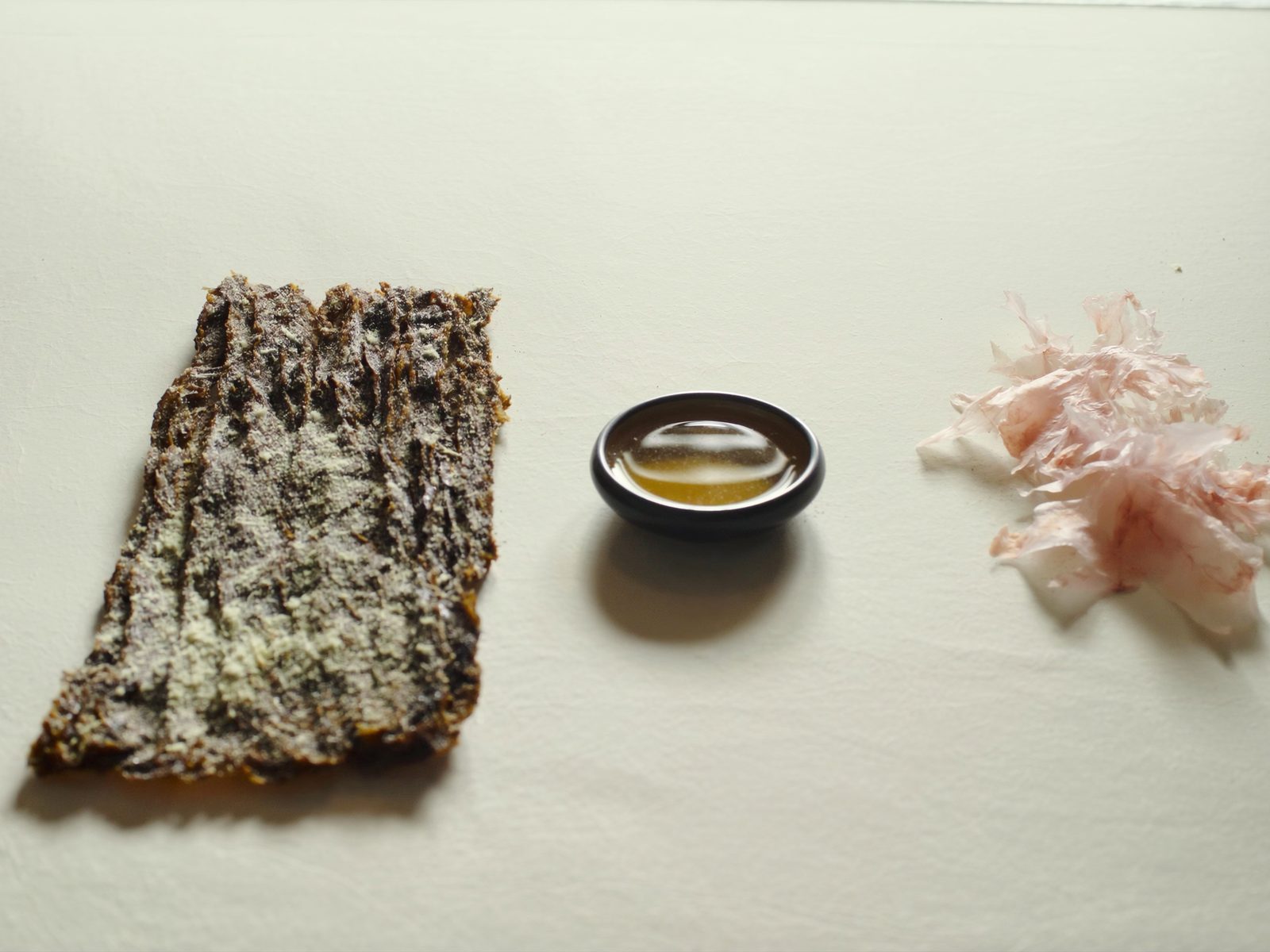
Kombu carries glutamate. Katsuobushi carries inosinate. Dried shiitake carries guanylate. Each tastes of umami on its own.
But put glutamate and inosinate together and the umami you perceive far exceeds the sum. It peaks at exactly 1:1, at roughly 7 to 8 times what either gives alone.
This is the design at the heart of washoku. It is why kombu and katsuo are always pulled together. It is why satisfaction can be built without fat.
Who found it
Three generations of Japanese chemists solved this.
- 1908 — Ikeda Kikunae identifies glutamate as the taste of kombu
- 1913 — Kodama Shintaro identifies inosinate as the taste of katsuo
- 1957 — Kuninaka Akira finds guanylate in shiitake, and the synergy with it
- 1967 — Yamaguchi Shizuko publishes the measurement of the synergy
Using it at the stove
One thing to remember: always pair a glutamate ingredient with an inosinate or guanylate one.
Kombu with katsuobushi. Kombu with dried shiitake. Tomato with meat. This is not only Japanese — stocks around the world are built this way.
- Glutamate — kombu, tomato, soy sauce, miso, cheese
- Inosinate — katsuobushi, niboshi, meat, fish
- Guanylate — dried shiitake and other dried mushrooms