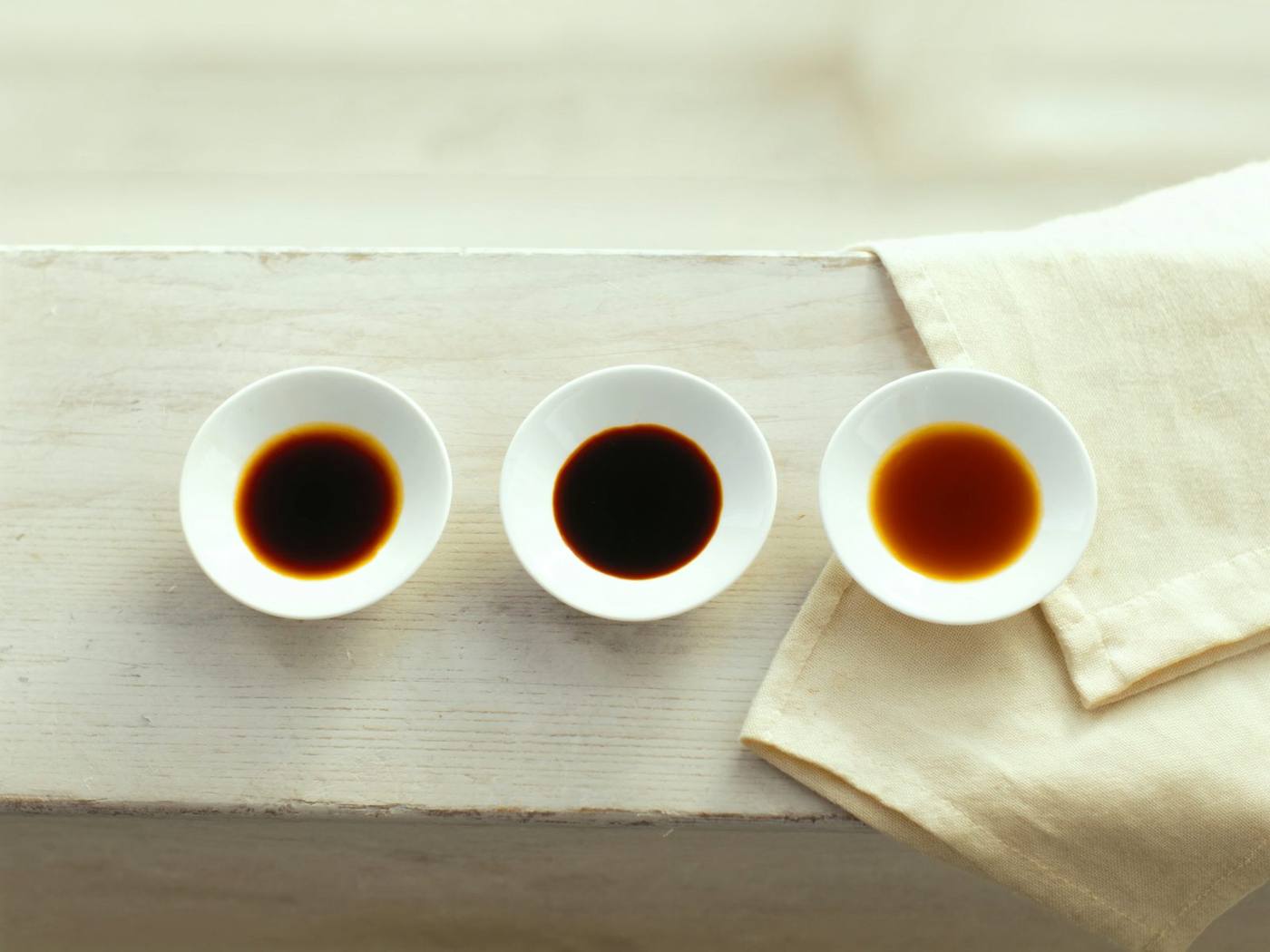
There are five
Shoyu
The figure
Koikuchi 16–17 % · Usukuchi 18–19 %
Usukuchi is saltier than koikuchi. It is only the colour that is light.
Usukuchi is not the light one
This is the most misunderstood thing about Japanese cooking outside Japan. Usukuchi soy is saltier than koikuchi. Koikuchi runs 16–17 % salt, usukuchi 18–19 %. What is light is the colour, not the salt.
The reason is in the making. Usukuchi slows the fermentation to keep the colour from deepening, and it uses about 10 per cent more salt to do it. The salt is there to hold the colour back.
So swapping usukuchi in at the same volume gives you a pale dish that is too salty. Swapping koikuchi in the other direction gives you the right seasoning and a brown dish. They do not substitute for one another.
The five
The Japanese Agricultural Standard divides soy sauce into five. They differ in what goes in and how it is brewed. Koikuchi is about 85 % of what ships; the other four share the rest.
- Koikuchi — soybean and wheat in roughly equal parts. 16–17 % salt. About 85 % of the market. The all-purpose baseline
- Usukuchi — much the same materials, brewed to hold the colour down. 18–19 % salt. About 11 %. Kansai
- Tamari — soybean alone or with a little wheat. Viscous, deeply savoury. 16–17 % salt. About 2 %. Chubu
- Saishikomi — brewed a second time in finished soy instead of brine. 12–14 % salt. About 1 %. San'in to north Kyushu
- Shiro — mostly wheat, very little soybean. Amber and sweet. 17–18 % salt. About 0.7 %. Aichi
East and west
Koikuchi in the east, usukuchi in the west. This is not a difference of taste but of ground.
The soy towns of Kansai sit on soft water — low in iron and other minerals, which suits brewing a pale soy. On top of that sat a cooking tradition built on dashi, which needed a soy that would not cover the colour of what it seasoned.
Edo was a city of labourers. People who worked hard wanted salt and depth, and a long-aged, heavier soy took hold.
The sweet soy of Kyushu is koikuchi finished with sugar and mirin. In the era when sugar was a luxury, Kyushu could get it more easily than most. What remains is that history.
Choosing
Anything whose colour you want to keep takes usukuchi — layered simmered dishes, clear soups, bamboo shoot with wakame. The ingredient shows through.
Almost everything else takes koikuchi — simmering, donburi, teriyaki, the bottle on the table. Four fifths of Japanese kitchens run on it.
Sashimi and sushi take tamari. It is thick enough to cling.