Days without katsuo
The other stocks
The figure
Niboshi 3–4% · Shiitake at 5 °C
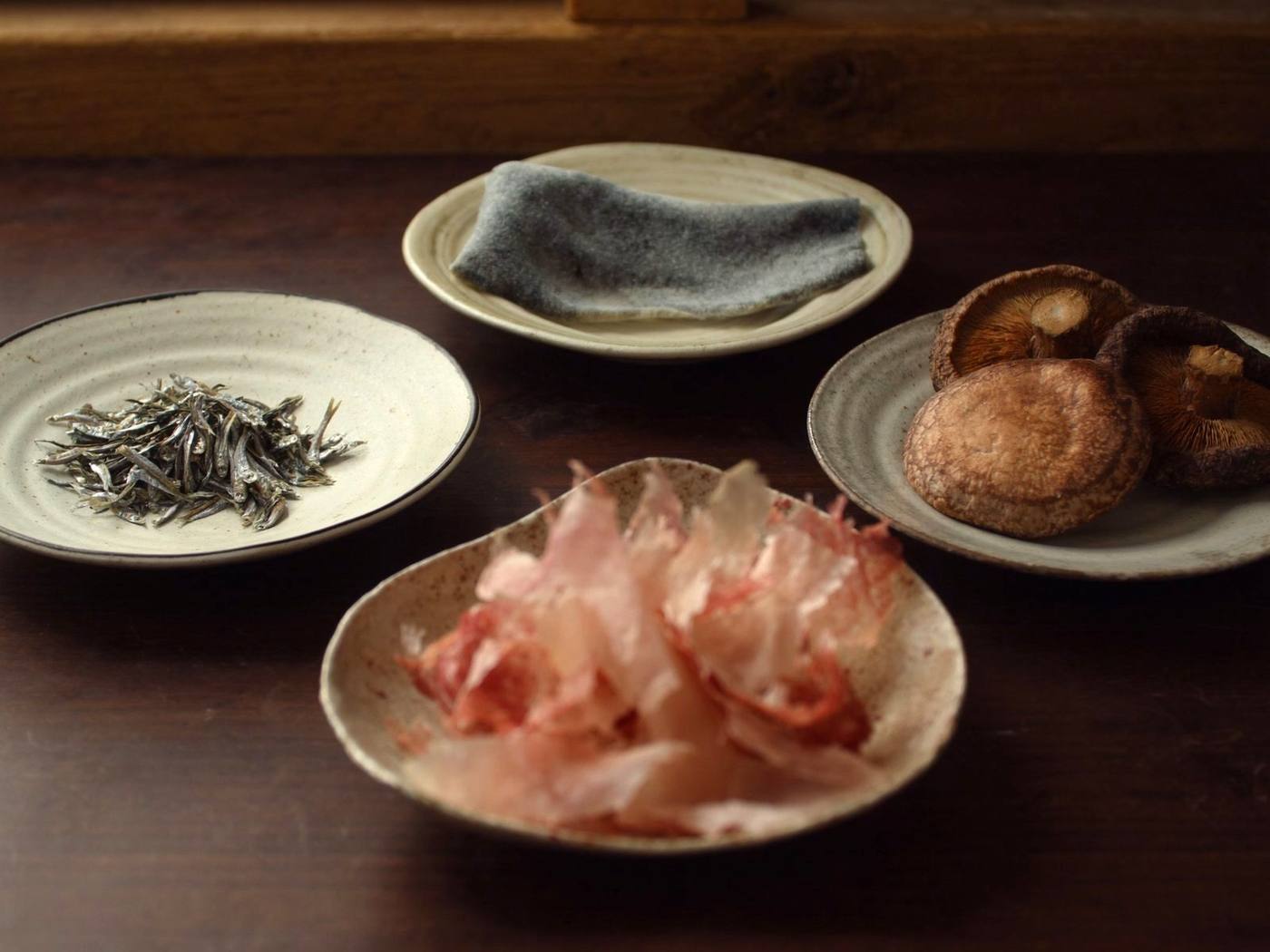
Kombu alone. Niboshi. Dried shiitake. A stock with no animal in it is built the same way.
Kombu alone
Kombu on its own. Without the katsuo the outline is softer, and it will not cover what it is poured over. This is the stock for shojin cooking, and for anything built on white fish or tofu.
10 to 30 grams of kombu to 1 litre of water; the sources spread widely here. Start at the low end and raise it next time if it falls short. There is only one rule about the heat: never boil it.
For a cold brew, overnight in the fridge. No heat means nothing muddy comes out. Setting it up the night before is both the least work and the cleanest result.
Niboshi
30 to 40 grams of dried sardine to 1 litre of water. Stronger and blunter than kombu or katsuo. This is the stock for miso soup and for udon broth.
Pull off the heads and the guts. The harshness comes from there.
30 minutes in the water, or overnight if you have it. Low heat, 5 to 10 minutes. Again, no boil.
Dried shiitake
Dried shiitake are rehydrated cold — 5 °C, overnight in the fridge. Rushing them in hot water drives off the aroma and leaves them watery.
Do not throw away the soaking water. That is the stock. The guanylate — the umami of the mushroom — is in it.
If you warm it before use, take it to 75 °C, kill the heat and leave it 10 minutes. The enzyme that builds guanylate works best between 50 and 75 °C. Do not go past it.
Shojin dashi
Kombu with dried shiitake. Glutamate meets guanylate and the synergy works exactly as it does with katsuo. Nothing animal goes in.
This is not a substitute. It is a stock in its own right, worked out over a thousand years in temple kitchens.