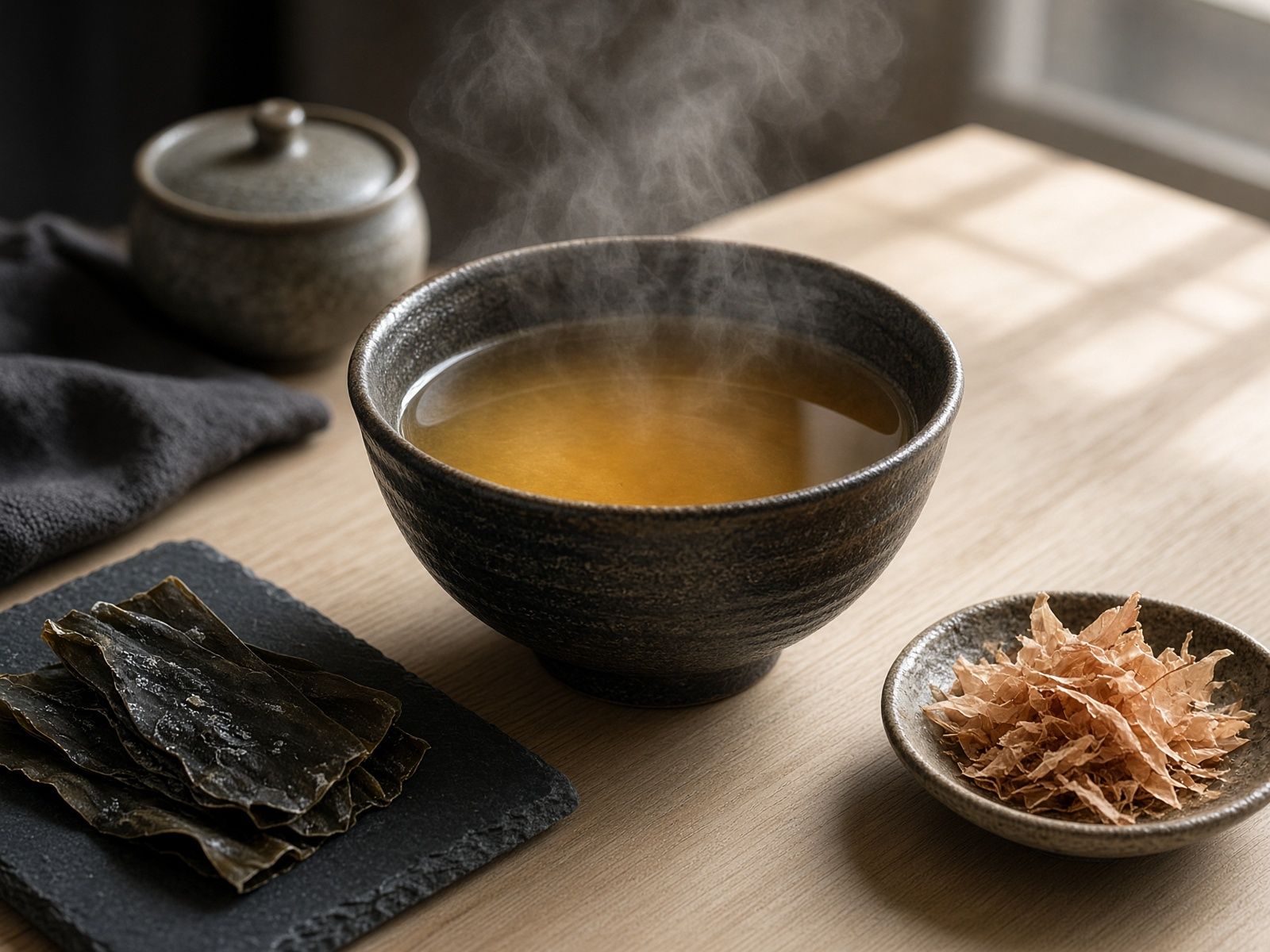
Two hundred years of it
Ichiban dashi
The figure
60 °C → 85 °C
Kombu at 60 °C for 1 hour. Lift it out, take the pot to 85 °C, kill the heat, all the katsuobushi at once. Strain when the flakes sink. Never press them.
Two temperatures
30 grams of kombu and 50 of katsuobushi to 1.8 litres of water — 1.7 % and 2.8 % of the water.
There are only two numbers to hold. 60 °C, then 85 °C. Every step sits between them.
- Water 1800 ml
- Kombu 30 g — 1.7 % of the water
- Katsuobushi 50 g — 2.8 % of the water
The temperature is the method
The kombu is not soaked first. It goes into the pot with the cold water, over a low flame. Let it climb slowly.
At 60 °C, hold it. 30 minutes to 1 hour. It is the temperature at which you cannot keep a finger in it. When the time is up, lift the kombu out.
Why 60 °C? Above 80 °C the kombu stops giving umami and starts giving a fishy, muddy taste. So while the kombu is in it, the pot never sees 80 °C.
Once the kombu is out, the heat can come up. 85 °C — the surface just beginning to move. Kill the heat there. Do not let it boil.
All the katsuobushi goes in at once. Then wait — not by the clock, but until the flakes sink.
Straining
Strain through a sieve lined with paper towel. Apply no pressure; wait for it to drain on its own. Do not push, do not squeeze.
Pressing or squeezing clouds the colour and brings out harshness. Clarity is half of what this stock is worth.
Niban dashi
Add water to the spent kombu and katsuobushi, 5 to 10 minutes on a low flame, and finish with a pinch of fresh flakes. This is enough for simmered dishes and miso soup. Keep the ichiban for clear soup and chawanmushi.