When to buy it
Shun — the season
The figure
Carotene ×2 · Vitamin C ×5
In season it is cheaper — and measurably more nutritious. The numbers exist.
Season is not a mood
Shun is the stretch of the year when an ingredient is fresher and tastes better than at any other time. And it is not only about taste.
Tomato carotene measures 528 µg in July, at the height of the season. In November it is 241 µg — less than half. Spinach vitamin C is 84 mg in December and 17 mg in September: a fifth. Same vegetable, same 100 grams.
In season it is cheap, it tastes best, and it carries the most nutrition. Once a year, all three peak together.
Hashiri, sakari, nagori
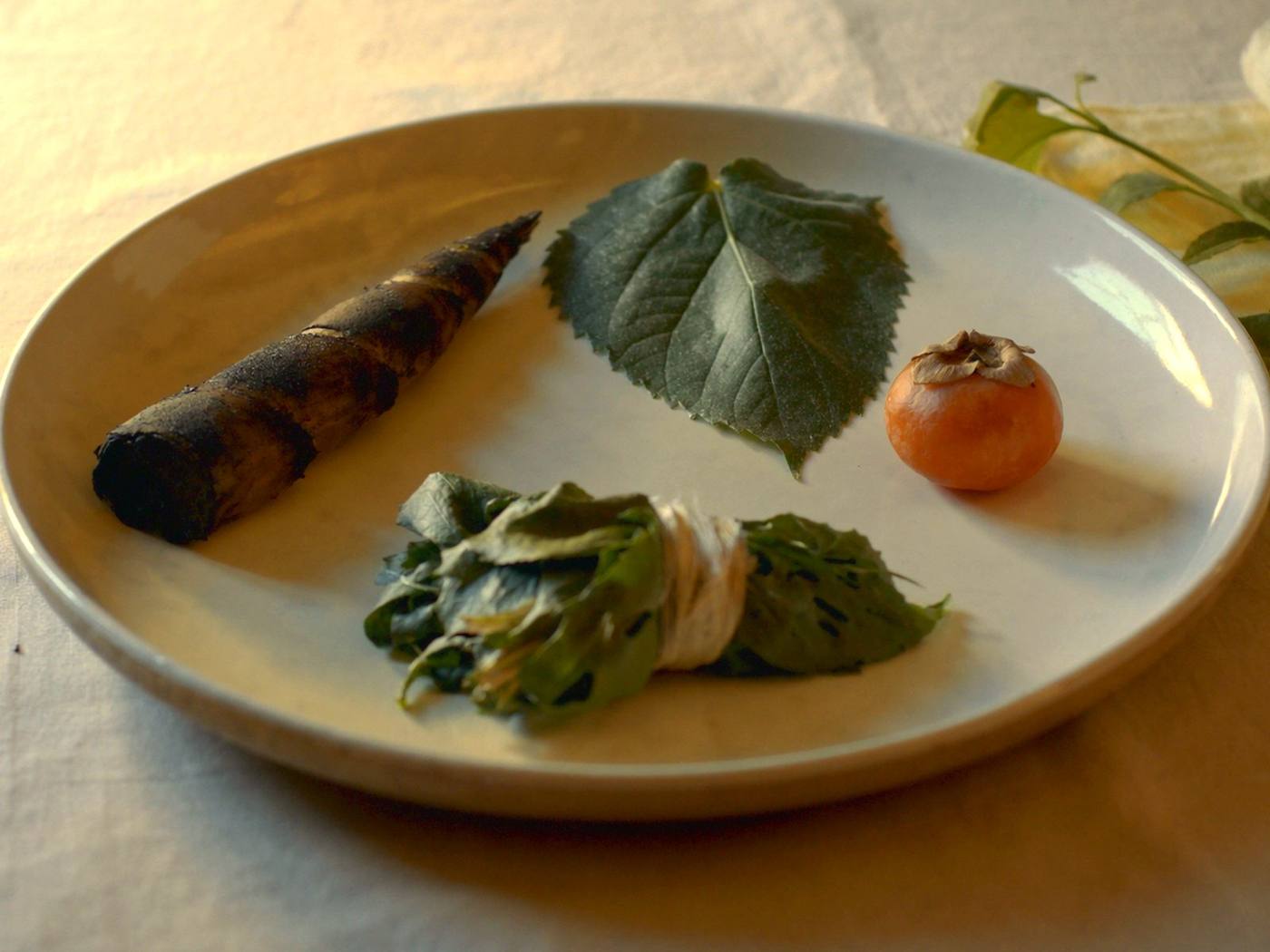
A restaurant splits the season in three. Hashiri is the first of it — the season's first bonito, valued for being early. Sakari is the height, when supply is widest, the flavour best and the price settled. Nagori is the end of it, thinning out, served as something taking its leave.
The same ingredient is handled differently at each end. Hashiri gets a lighter hand; nagori gets longer heat. Even the words on the menu change.
The four seasons
The representative ingredients of each season. It shifts by a month either way with the region and the year.
- Spring — bamboo shoot, rapeseed flower, asparagus / sea bream, bonito, clam
- Summer — corn, aubergine, cucumber / sea bass, conger eel, grunt
- Autumn — lotus root, shungiku, burdock / octopus, young yellowtail, barracuda
- Winter — daikon, napa cabbage, spinach / yellowtail, wakame