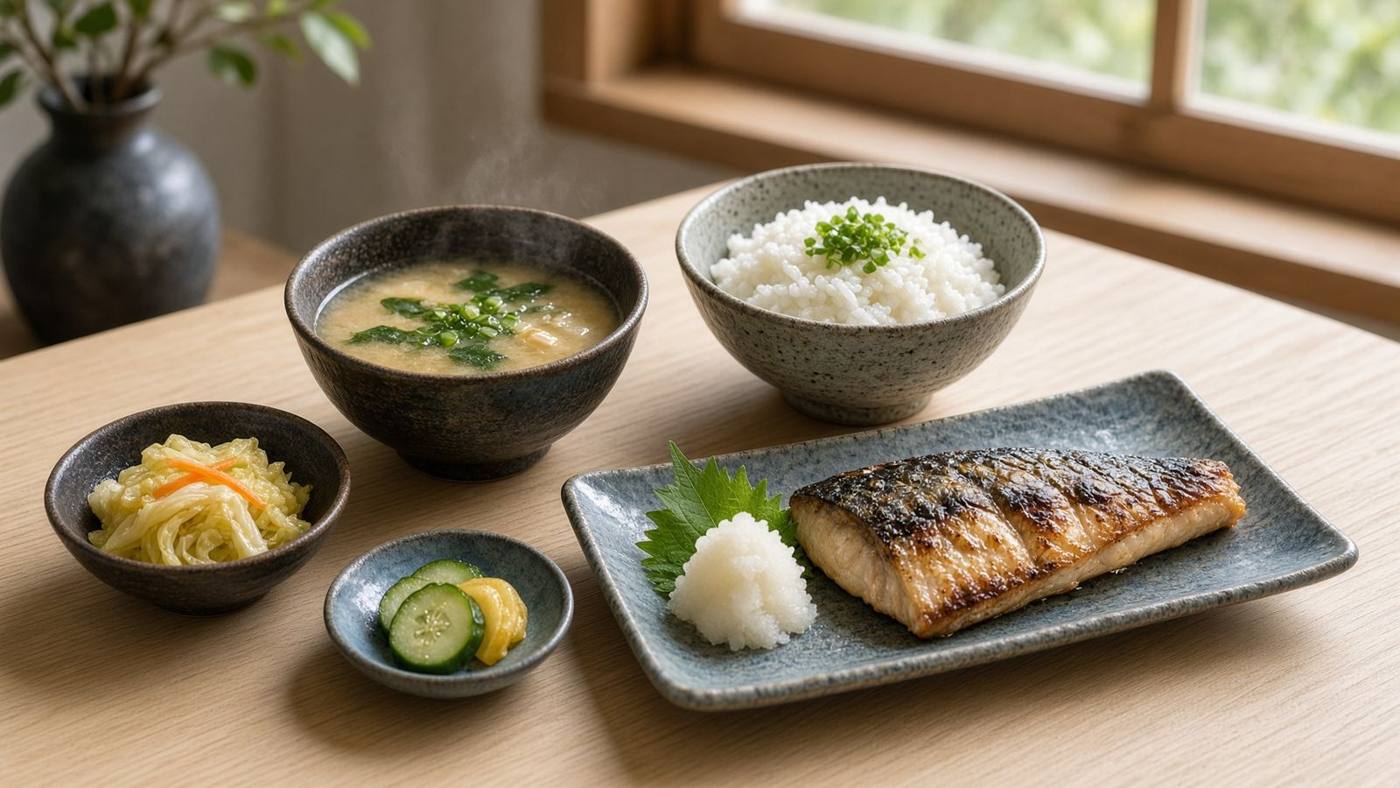
How a meal is built
Ichiju-sansai
The figure
1 soup · 3 dishes
Rice, one soup, three dishes. Even where each one sits on the tray is settled.
The three dishes
Rice, one soup, three dishes — 1 main and 2 sides. That is ichiju-sansai, taught for generations as the shape of a balanced meal.
Two dishes instead of three is ichiju-nisai. The shape survives the subtraction — what goes is a side, never the main, the soup or the rice.
- Staple — rice
- Soup — miso soup or clear soup
- Main — fish, meat or egg. Grilled or fried
- Side — vegetables, potato, beans, seaweed. Usually simmered
- Second side — dressed greens, vinegared dishes, ohitashi
- Pickles — not counted among the three
Where each one sits
The placement is fixed. Rice at the front left, soup at the front right. Main dish back right, side back left, second side in the middle.
There are reasons. The rice bowl is lifted with the left hand, so it sits on the left. Spilling the soup is the worst outcome, so it goes on the dominant right side where it is least likely to be knocked.
A whole fish is laid with its head to the left. The same principle — left is the senior side — runs through both the placement of the bowls and the direction of the fish.
What UNESCO actually registered
In 2013 UNESCO inscribed “Washoku, traditional dietary cultures of the Japanese.” What was registered was not sushi or tempura. It was the set of customs and practices around food, built on a respect for nature.
Four characteristics are named: diverse, fresh ingredients and respect for what each one already tastes of; a nutritionally balanced diet; the expression of natural beauty and the turning of the seasons; and a close tie to the year's observances, above all the New Year.