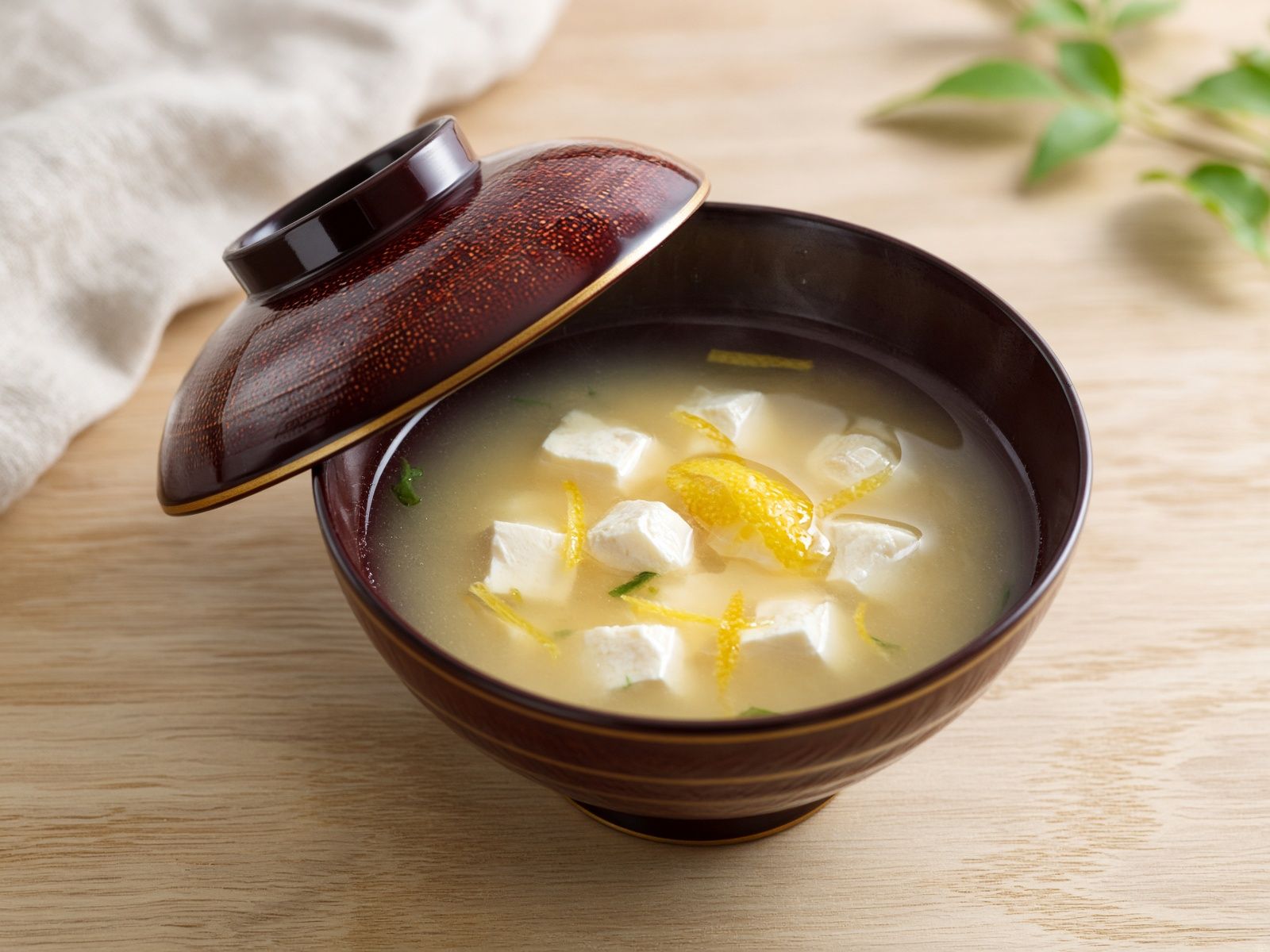
Clear soup is 0.6–0.9% salt. Clarity is the test.吸い物の塩分は0.6〜0.9%。澄んでいることが正しさ。
Clear soup
吸い物
Ichiban dashi, salt and a little usukuchi soy — nothing else. Salt is 0.6 to 0.9% of the liquid: 1.1 to 1.6 g in a 180 ml bowl. Salt to usukuchi runs about 2 : 1.
一番出汁に塩と薄口醤油だけ。塩分は汁全体の0.6〜0.9%。180mlの椀なら塩に換算して1.1〜1.6g。塩と薄口の比はおよそ2:1。
The sources split. Nutrition teaching sits low at 0.5–0.7%; taste-first home guidance goes to 0.8–1.0%, on the grounds that you drink all of it. Adjust upward if it reads thin — but suspect the dashi before you suspect the salt.
ここは資料が割れている。栄養指導は0.5〜0.7%と低く、家庭向けの味の設計は0.8〜1.0%と高い。汁を全部飲む前提かどうかで変わる。薄いと思ったら上げていい。ただし上げる前に出汁を疑うこと。
Clarity is the test. If it is cloudy you either squeezed it or boiled it.
澄んでいることが正しさ。濁ったら、絞ったか、沸かしたか、どちらかだ。
Assembly and aroma
盛りと香り
The garnish goes into the bowl first. Pour the dashi at 70–80°C. One shaving of yuzu peel at the very end, never cooked. Heat takes the aroma with it.
具は椀に先に入れる。出汁は70〜80℃で注ぐ。ゆず皮は最後に一削り。加熱しない。香りは熱で飛ぶ。