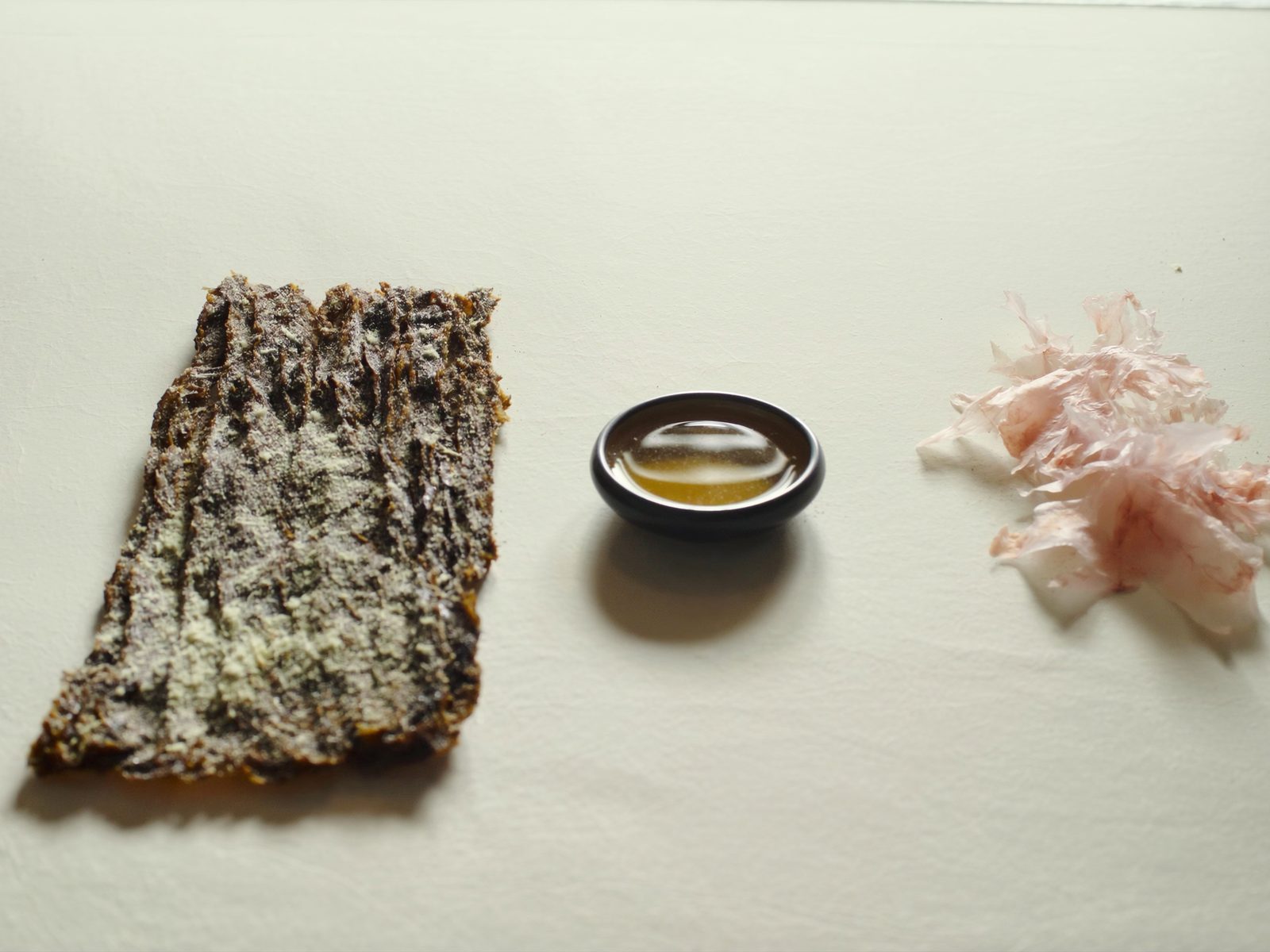
Kombu and katsuo at 1:1 give seven to eight times the umami of either alone.昆布と鰹を1:1で合わせると、うま味は単体の7〜8倍になる。
Two of them do not add up. They multiply.
二つを混ぜると足し算にならない
Kombu carries glutamate. Katsuobushi carries inosinate. Dried shiitake carries guanylate. Each tastes of umami on its own.
昆布のうま味はグルタミン酸。鰹節のうま味はイノシン酸。干し椎茸はグアニル酸。どれも単体でうま味を持つ。
But put glutamate and inosinate together and the umami you perceive far exceeds the sum. It peaks at exactly 1:1, at roughly seven to eight times what either gives alone.
ところがグルタミン酸とイノシン酸を合わせると、感じるうま味は足した量をはるかに超える。ちょうど1:1のとき最も強く、単体で味わうときのおよそ7〜8倍になる。
This is the design at the heart of washoku. It is why kombu and katsuo are always pulled together. It is why satisfaction can be built without fat.
これが和食の設計の核心だ。だから昆布と鰹を必ず一緒に引く。だから脂を使わずに満足感が作れる。
Who found it
見つけた人たち
Three generations of Japanese chemists solved this.
日本人が三代かけて解いた問題だ。
- 1908 — Ikeda Kikunae identifies glutamate as the taste of kombu1908年 池田菊苗 昆布のうま味がグルタミン酸であることを突き止める
- 1913 — Kodama Shintaro identifies inosinate as the taste of katsuo1913年 小玉新太郎 鰹のうま味がイノシン酸であることを解明
- 1957 — Kuninaka Akira finds guanylate in shiitake, and the synergy with it1957年 国中明 椎茸のグアニル酸を発見。同時期に相乗効果も見つける
- 1967 — Yamaguchi Shizuko publishes the measurement of the synergy1967年 山口静子 相乗効果を定量化した論文を発表
Using it at the stove
台所で使う
One thing to remember: always pair a glutamate ingredient with an inosinate or guanylate one.
覚えることは一つ。グルタミン酸の食材と、イノシン酸かグアニル酸の食材を、必ず組む。
Kombu with katsuobushi. Kombu with dried shiitake. Tomato with meat. This is not only Japanese — stocks around the world are built this way.
昆布×鰹節。昆布×干し椎茸。トマト×肉。これは和食に限らない。世界中の出汁がこの形をしている。
- Glutamate — kombu, tomato, soy sauce, miso, cheeseグルタミン酸 昆布・トマト・醤油・味噌・チーズ
- Inosinate — katsuobushi, niboshi, meat, fishイノシン酸 鰹節・煮干し・肉・魚
- Guanylate — dried shiitake and other dried mushroomsグアニル酸 干し椎茸・乾燥きのこ