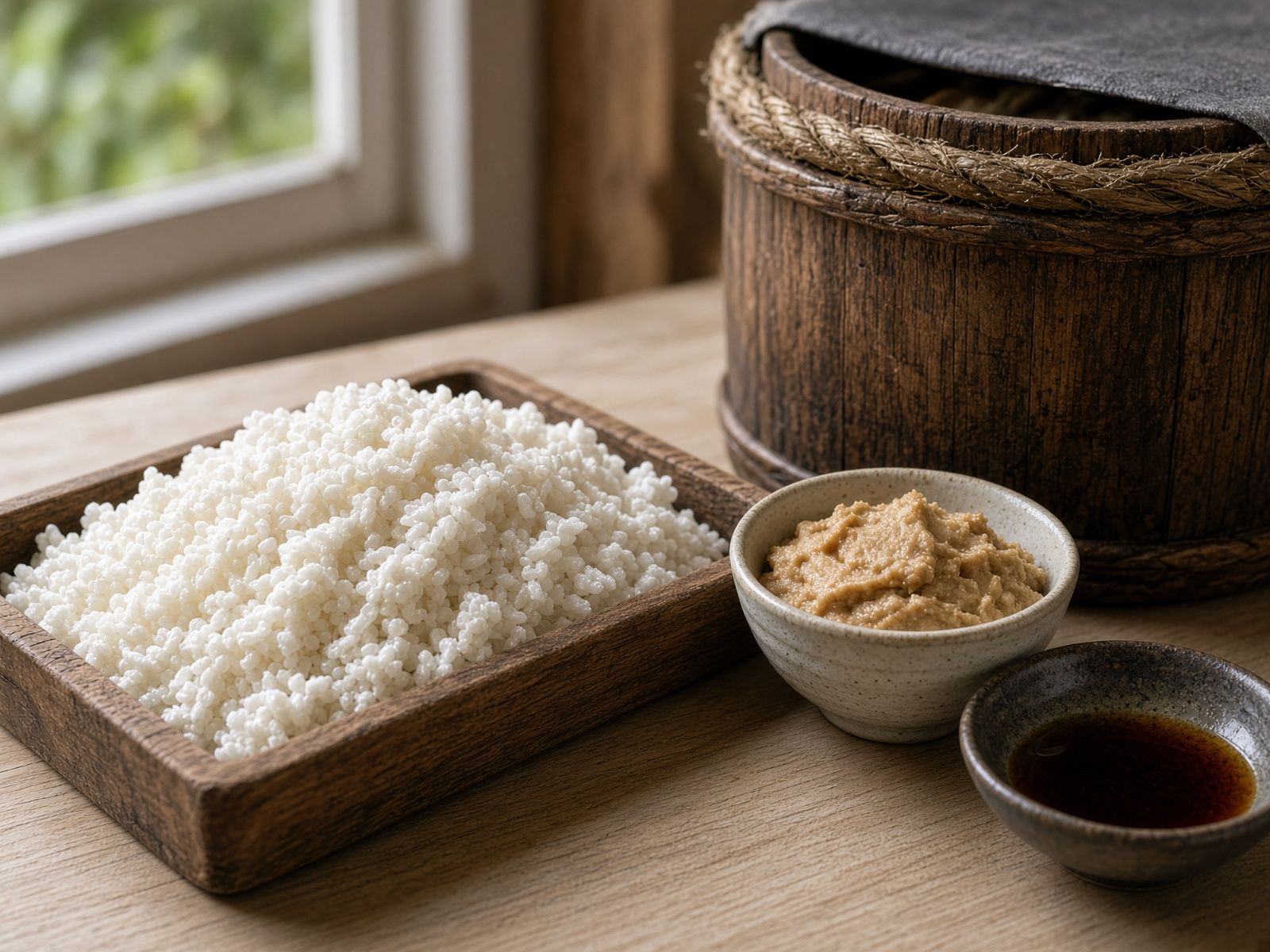
Miso runs 10–12% salt. Salt here is not seasoning — it is the speed control on fermentation.味噌の塩分は10〜12%。塩は辛さではなく、発酵の速度を決める数字。
Washoku is a fermented cuisine
和食は発酵の料理
If dashi is the skeleton, the fermented seasonings are the blood. Soy sauce, miso, mirin, vinegar, sake — koji works first in all of them.
出汁が骨格なら、発酵調味料が血になる。醤油、味噌、みりん、酢、酒。どれも麹菌が先に働く。
Lactic acid bacteria, yeasts and acetic acid bacteria are everywhere. What is Japanese is putting koji at the centre. Its enzymes cut protein into amino acids and starch into sugar; the bacteria add acid and the yeast adds aroma.
乳酸菌や酵母、酢酸菌は世界中にある。麹を中心に据えるのが日本の発酵。酵素がタンパク質をアミノ酸に、デンプンを糖に分解し、乳酸菌が酸を、酵母が香りを足す。
Salt is a number for the microbes
塩は、菌のための数字
Rice miso runs about 10 to 12 per cent salt. Too little and it rots; too much and everything stops. The salt is not there for flavour — it sets the speed.
米味噌の塩分はおおむね10〜12%。塩が少ないと腐敗し、多いと菌が止まる。塩は辛さではなく、発酵の速度を決めるパーセントだ。
Grilled fish at 2% of its weight, miso soup at 8–10% of the dashi, clear soup at 0.6–0.9%. This cuisine is made of numbers first. The instinct arrives later.
魚の塩焼きが重量の2%、味噌汁が出汁の8〜10%、吸い物が0.6〜0.9%。この料理は最初から数字でできている。感覚はあとから付いてくる。