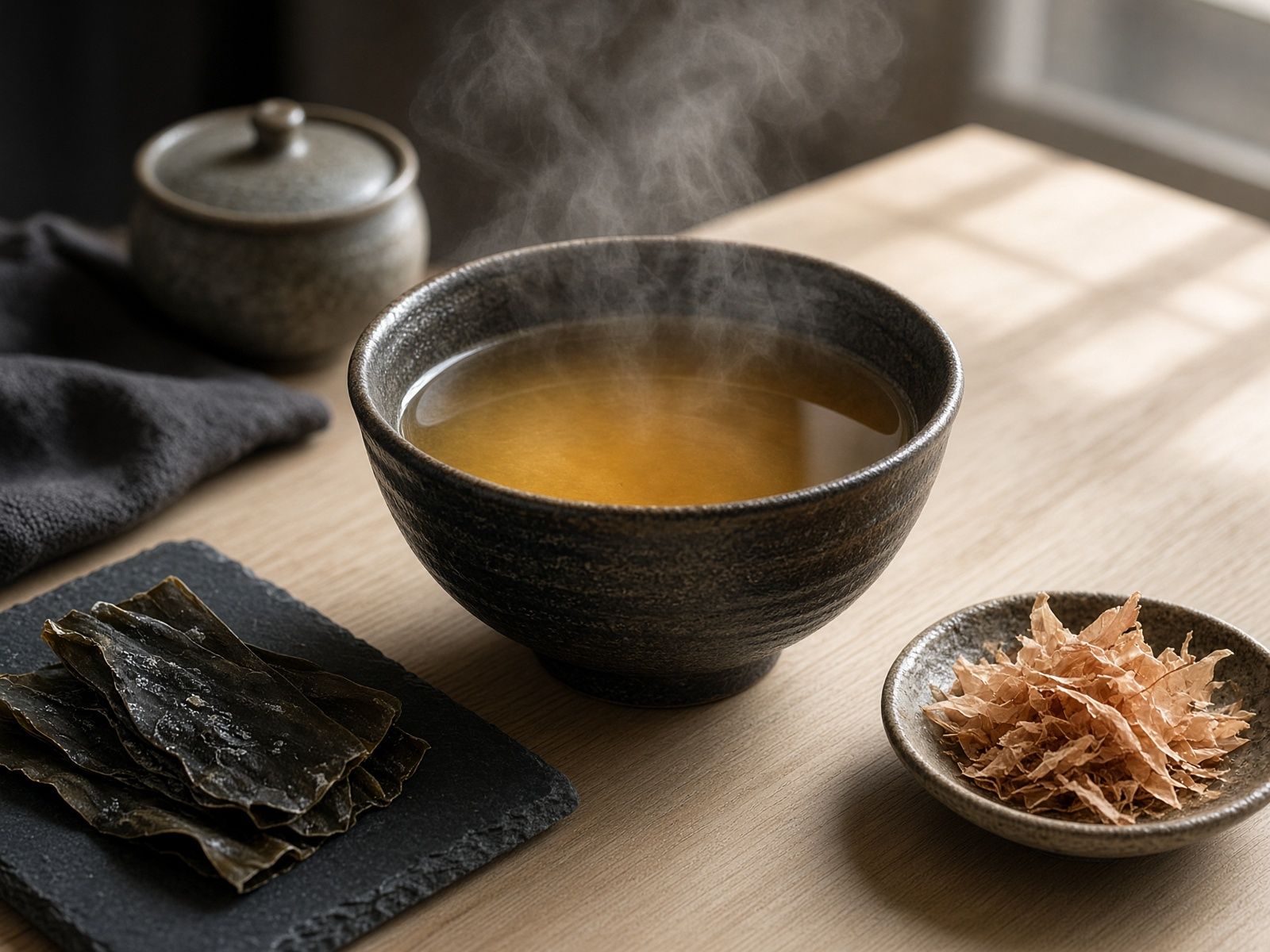
Kombu 1% of the water, katsuobushi 2%. Two temperatures, both correct.水に昆布1%、鰹節2%。温度は二通りあり、どちらも正しい。
Why dashi first
なぜ出汁が先か
Washoku is not seasoning stacked on water. Umami from dashi carries the salt and the sweet. Weak dashi makes you pour soy. Correct dashi needs little else.
和食は調味料の足し算ではない。出汁の旨味に、塩味と甘味を乗せる。出汁が弱いと醤油が増える。出汁が正しいと、調味は少なくて足りる。
Start with ichiban dashi. Soups, simmered dishes, chawanmushi, the sauce for donburi — they all begin here.
まず一番出汁。椀物、煮物、茶碗蒸し、丼の割り下。ここから始まる。
Ichiban dashi, per litre of water
一番出汁の割合(水1リットル)
Kombu 1% of the water, katsuobushi 2%. Kikkoman, Yamaki and Ninben publish the same numbers. That is the baseline.
水に対して昆布1%、鰹節2%。キッコーマン、ヤマキ、にんべんが同じ数字を出している。ここが基準。
In practice sources run kombu 0.5–1.7% and katsuo 1.25–3%. To go stronger, add katsuobushi. More kombu brings slipperiness, not depth.
実際には昆布0.5〜1.7%、鰹節1.25〜3%まで幅がある。濃くしたければ鰹節を増やす。昆布を増やすとぬめりが出る。
- Water 1000 ml水 1000ml
- Kombu 10 g昆布 10g
- Katsuobushi (hanakatsuo) 20 gかつお節(花かつお) 20g
Two temperatures, both correct
温度は二通りある
Here the sources genuinely disagree. We are not going to round it to one number. Both are given.
ここは資料が本当に割れている。片方に丸めない。両方書く。
The home method: soak the kombu 30 minutes or more, then medium heat. Lift it out just before the boil, when small bubbles start off the bottom. Kikkoman, Yamaki, Ninben, Kurakon, Hagoromo and the Japan Kombu Association all teach this. It is fast.
家庭の方法:昆布を30分以上水に浸し、中火。沸騰する直前、鍋底から小さな泡が上がったら昆布を引き上げる。キッコーマン、ヤマキ、にんべん、くらこん、はごろも、日本昆布協会がこれ。速い。
The restaurant method: bring it slowly to 60°C and hold it there for 30 to 60 minutes. This is Murata Yoshihiro of Kikunoi, on NHK. He gives the reason: above 80°C the kombu stops giving umami and starts giving a fishy, muddy taste. It is cleaner.
料亭の方法:弱火で60℃まで上げ、その温度を30〜60分保ってから引き上げる。NHK『きょうの料理』の村田吉弘(菊乃井)。理由も述べている——80℃を超えると昆布の旨味が出ず、逆に生臭さと雑味が出る。澄む。
One rule is shared by every source. Never let it boil.
共通するのは一つ。沸騰させない。
The katsuobushi
鰹節
Take the pot off the heat. Add the katsuobushi all at once. After one to two minutes, strain through cloth or a fine sieve. Do not squeeze. Squeezing clouds it.
昆布を引き上げたら火を止める。鰹節を一度に入れる。1〜2分沈めたら、布か細かい濾し器で濾す。絞らない。絞ると濁る。
Niban dashi
二番出汁
The used kombu and katsuobushi with 500 ml to 1 litre of water, five to ten minutes on low. Finish with a pinch of fresh katsuobushi — oigatsuo. This is for nimono and miso soup. Keep ichiban for clear soup and chawanmushi.
一度使った昆布と鰹節に水500ml〜1L。弱火で5〜10分。最後に削り節をひとつまみ足す(追い鰹)。煮物と味噌汁の土台。一番は椀物と茶碗蒸しに残す。